

Menu

 Beads made in France
A QUESTION?
FREE DELIVERY 24/72H
FRANCE
For individuals and professionals
MENU
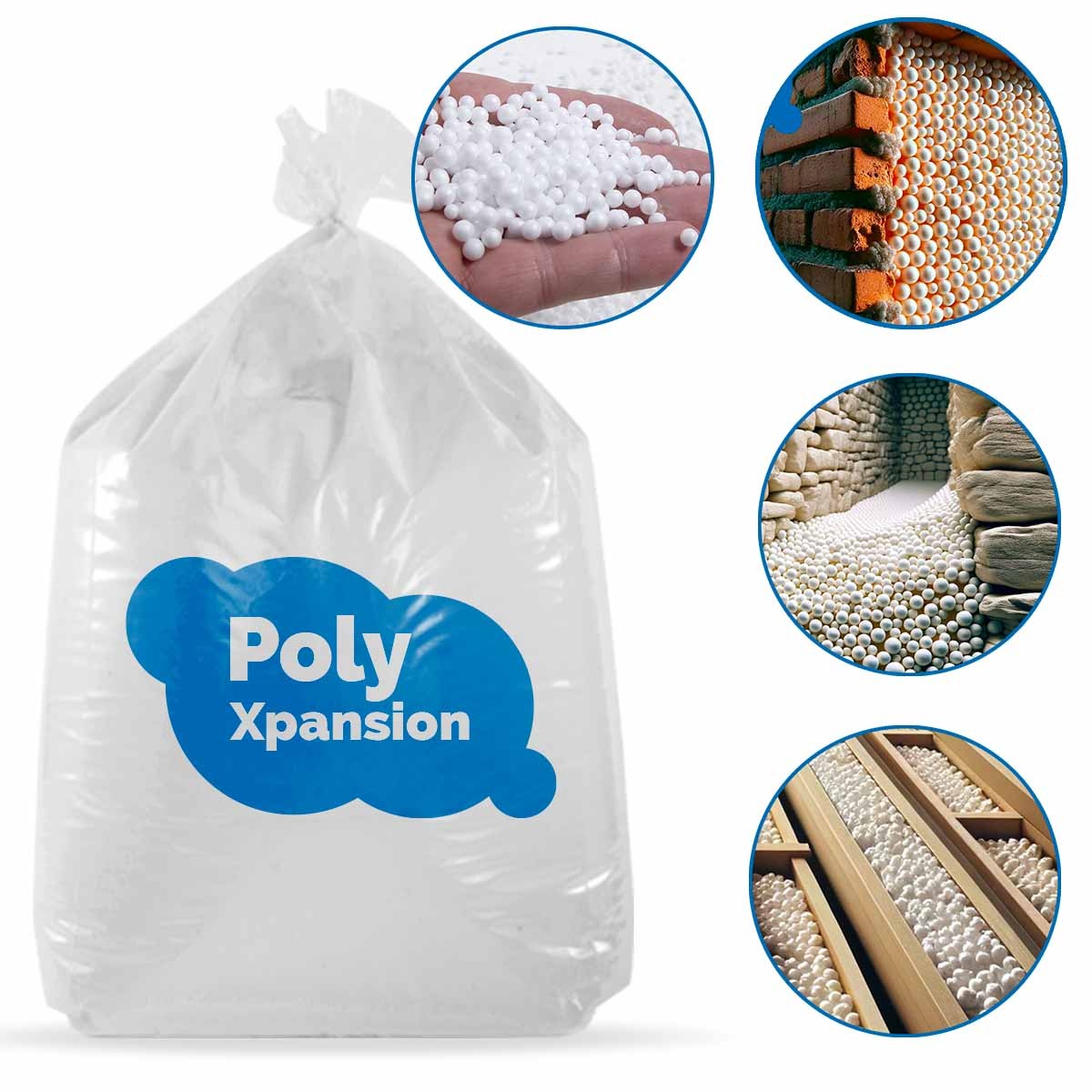
Polystyrene beads M1 fireproof insulation for efficient insulation of attics, roofs, floors, crawl spaces, partitions, hollow walls and drainage. Perfectly compatible with a blower injector.
| Color: | white |
|---|---|
| Size: | 2-4mm |
| Made in: | France |
| Lambda value: | 0,0035 - 0,0037 W/mK |
| Composition: | polystyrene |
Polystyrene beads are an ideal solution for you if you are looking for a way to optimize thermal and acoustic insulation in your home. They reduce heat losses, in addition to guaranteeing good acoustic comfort.

Optimize your insulation with our polystyrene bead blower injector. Quick and efficient, it ensures a uniform application for optimal thermal and acoustic insulation, ideal for individuals and professionals.
Our factory in France specializes in the production of high-quality polystyrene beads, suitable for the needs of professionals and individuals. Being able to produce huge volumes of beads, we offer competitive prices without compromising quality.
Our polystyrene beads can be used to ensure a variety of uses, including:
To guarantee perfect wall insulation, count on an average thickness of 12 cm to 18 cm.
The insulation measurement unit of beads is calculated by the lambda (λ) value, which represents thermal conductivity.
The lower this value is, the more efficient the insulation is.
IMPORTANT: There are different types of polystyrene beads.
Discover our new polystyrene beads, a reference in insulation with a lambda of 0.035 to 0.037 W/mK, guaranteeing optimal performance.

New white marbles isolate better (They are M1 FIRE-PROOF) than recycled graphite marbles. They can be easily spotted, they are perfectly round and dust-free.
Graphite black RECYCLED polystyrene insulates poorly and resists temperature changes poorly, promoting condensation and mold. Some sellers sell it as new: stay vigilant and choose new beads for reliable insulation.

The graphited beads for insulation RECYCLED contain graphite, have a lower insulation value and are not M1 FIRE-RESISTANT, they can sometimes pose a fire risk. They can be easily recognized by the shape of the bead which is broken or deformed with dust.
Poly Xpansion® polystyrene balls, M1 fire-resistant, provide effective thermal insulation. Breathable, they evacuate moisture for healthy air. Rot-proof, they resist mold and do not compact, ensuring maintenance-free, long-lasting insulation.
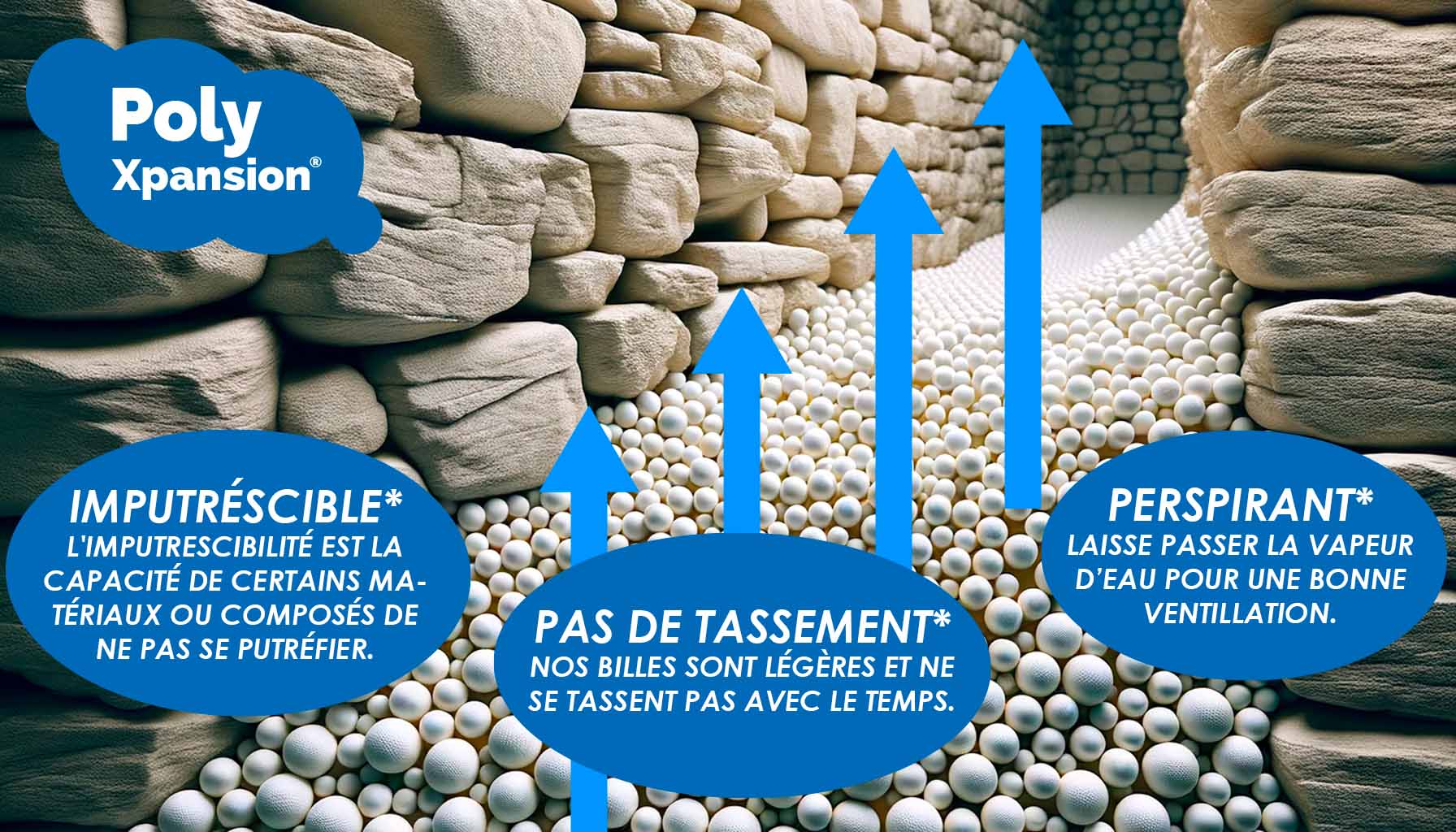

The Poly Xpansion® marbles effectively isolate hollow walls and partitions. Light and easy to apply, they reduce thermal bridges, limit heat loss and improve indoor comfort.
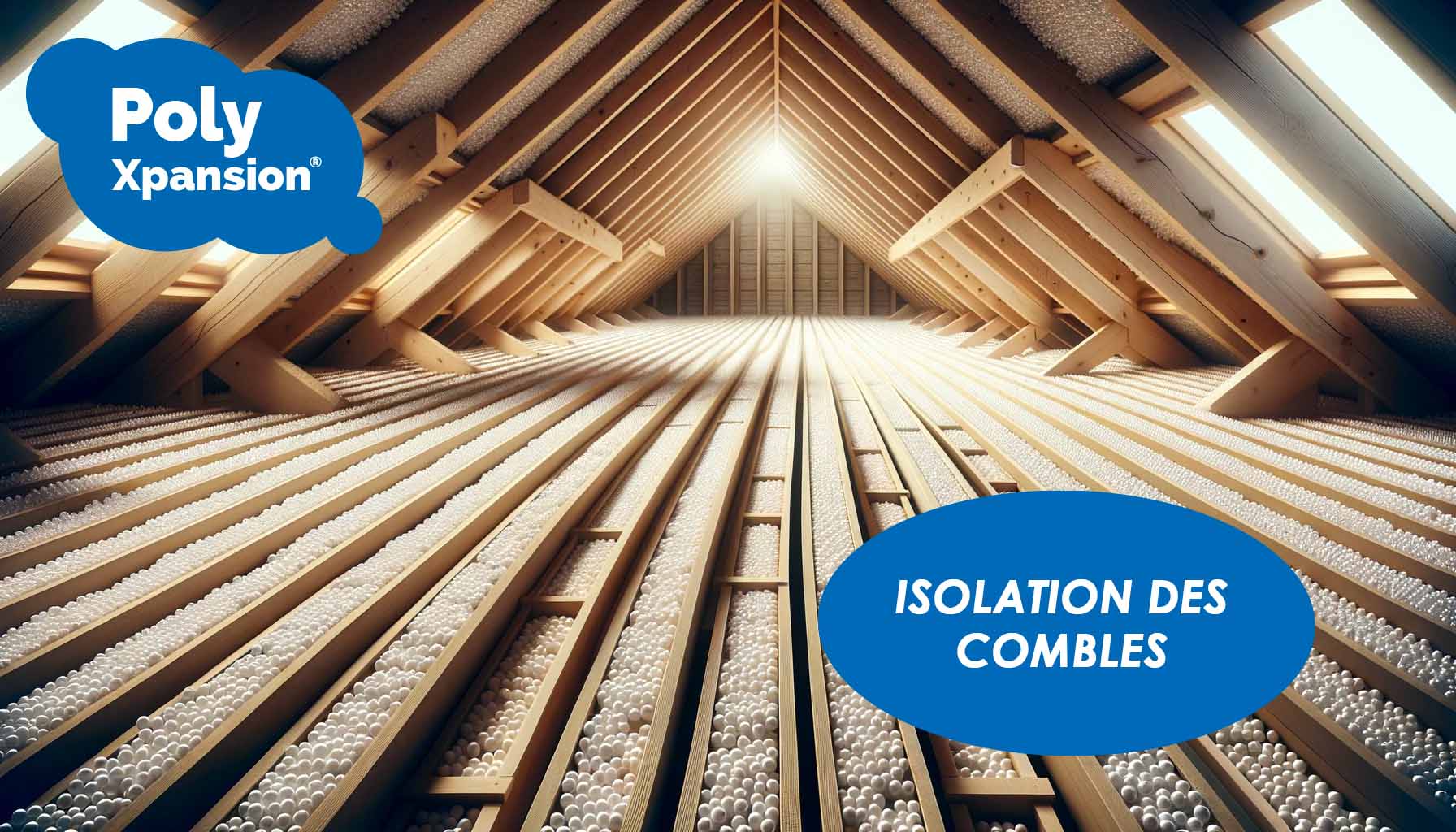
The Poly Xpansion® beads ensure effective and safe insulation of attics and under-roofs, areas sensitive to thermal variations.
In terms of insulation, we often use thermal resistance, marked by an R, to gauge how a material prevents heat from passing through. It's a bit like a fortress: when this R climbs, the insulator does a better job of preserving heat in winter or keeping it away in summer. With polystyrene beads, if you choose a thicker layer or a low lambda option such as graphite, it strengthens everything. And in the end, your house stays warm or cool, which lightens the energy bills year after year.

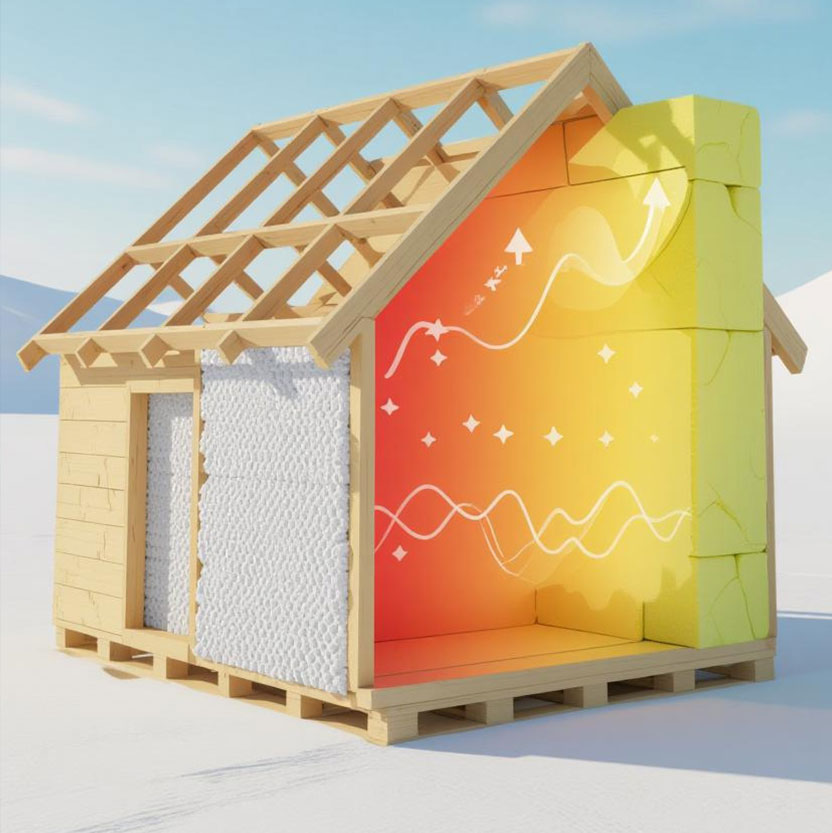
Thermal phase shift is the time it takes for heat to pass through an insulating material. Like a brake that slows down temperature jumps: if this phase shift lasts long, say a few hours, your interior is not subject to the whims of the outdoors, and you enjoy regular comfort from morning to night. For our graphite beads, which are a bit more compact, this delay stretches longer than for regular white polystyrene beads. Perfect for homes where it is really hot during the day and cool at night.
Discover how our polystyrene beads surpass other insulators in thermal performance, durability, and ease of installation. The lower the lambda, the better the insulation!
| Material | Lambda (λ) | Thickness R=5 (cm) | Notes: Why is it less efficient than our polystyrene beads ? |
|---|---|---|---|
| M1 PolyXpansion Marbles (reference) | 0.035 - 0.037 | 17 | Very good lambda with M1 fire resistance rating, quick installation by injection, resistant to moisture, durable and without settling. Perfect for safe and efficient insulation. |
| Glass wool | 0.044 | 22 | Similar performance on paper, but sensitive to humidity (loss of efficiency if wet), risk of bulk compaction, skin irritation during application, less suitable for pure injection (often need for binder). |
| Rock wool | 0.042 | 21 | Good thermal conductivity and fire resistant, but heavier, can compress over time in vertical cavities, absorbs moisture if not treated, more complex installation for injection (risk of thermal bridges). |
| Cellulose wadding | 0.043 | 22 | Ecological and affordable, but sensitive to rodents and humidity (borax treatment required), possible settling (up to 20% vertically), dusty injection and less homogeneous. |
| Expanded cork | 0.050 | 25 | Natural and sustainable with good acoustics, but variable and often higher lambda, expensive, sensitive to humidity without treatment, not ideal for injection (often in panels). |
| Vermiculite | 0.090 | 45 | High lambda: weak insulation, requires a lot of thickness. Sensitive to humidity, risk of compaction, health controversy (possible asbestos in old stocks). |
| Exfoliated perlite | 0.060 | 30 | Less insulating, additional thickness required. Good for drainage but settling possible, more expensive to install in cavities. |
| Straw | 0.052 | 26 | Moderate performance, eco-friendly but sensitive to rodents/moisture, requires treatment. Not suitable for injection, laborious manual installation. |
| Cellular glass | 0.050 | 25 | Fire resistant and incompressible, but average lambda, heavy and expensive, less flexible for irregular cavities (often in panels). |
| Coconut wool | 0.047 | 24 | Average lambda, good acoustics but imported (CO₂ impact), sensitive to pesticides, more expensive and less common for injection. |
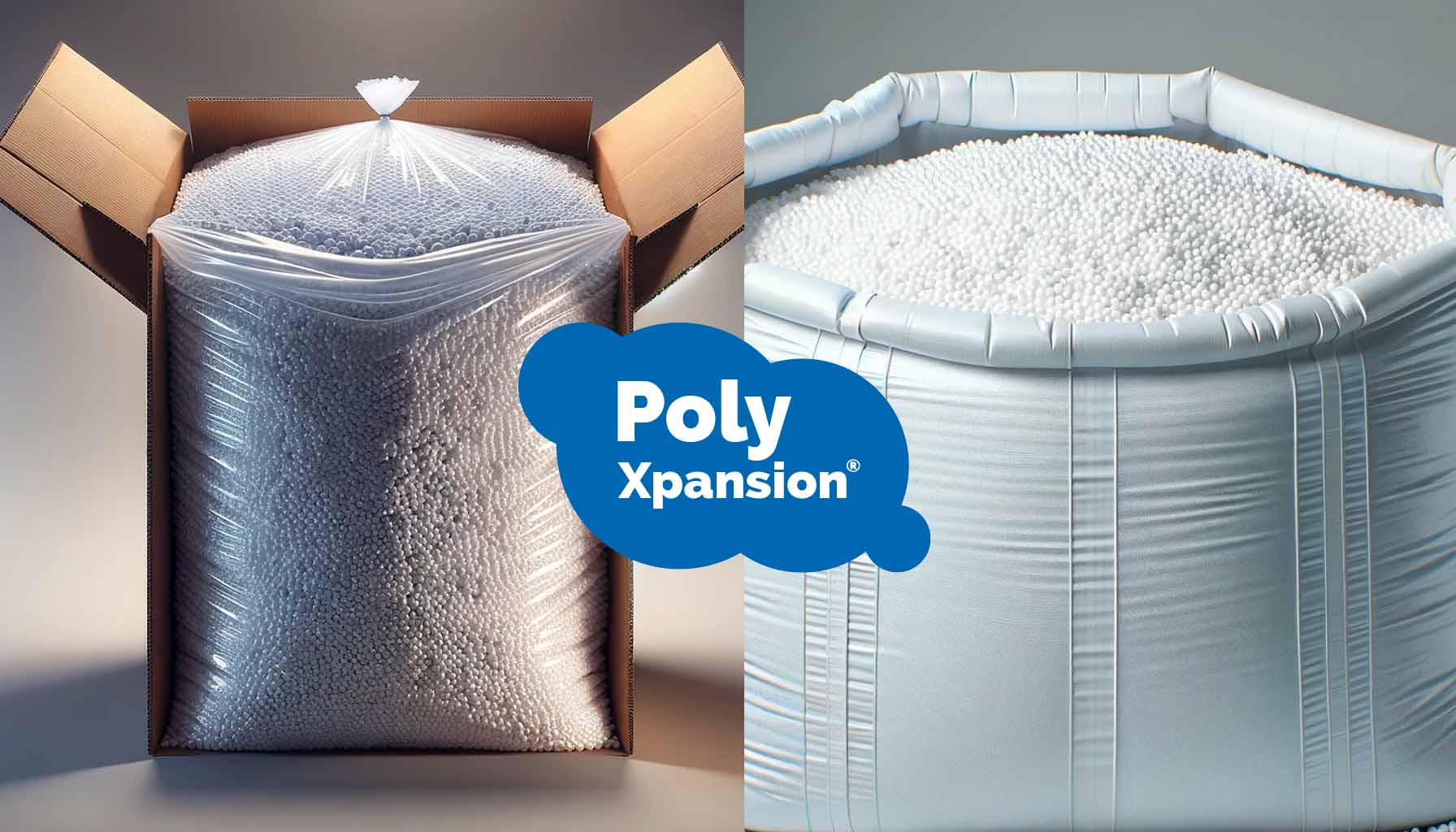
Shipping your order
Your orders are shipped free of charge in France within 2 days of receiving your payment. We use a single carrier to ensure efficient and reliable tracking. Once your package has been shipped, you will receive an email with a link to track the delivery online.
Shipping costs are fully covered, with no additional charges for you. We recommend that you group all your items into a single order for more convenience.
IMPORTANT:
For orders of more than 200 liters, delivery will be made in several shipments. For any additional questions about deliveries, do not hesitate to contact us.
check_circle
check_circle
